Showing posts with label YA. Show all posts

Saturday, September 26, 2009

Banned Books Week FTW!

There are few holidays I enjoy celebrating more than Banned Books Week. To me, banning a book is just such a brilliant way of acknowleging its power and encouraging young people to read it.

People challenge books in school and public libraries all the time, everywhere. bannedbooksweek.org, in addition to their list of Banned Book Week events, now has a map of book challenges in the United States. Here's what they say about it:

There are hundreds of challenges to books in schools and libraries in the United States every year. According to the American Library Association (ALA), there were at least 513 in 2008. But the total is far larger. 70 to 80 percent are never reported.

I took a look through the ALA's list of challenged and banned books for 2008-09 and I was happy to see books that I've reviewed on this blog, and more importantly, books that I've bought for the two school library collections that I manage.

Here is just a sample of the books that people have felt most threatened by in the past year. If I've reviewed it, the link is on the title. Get threatened! Read these books!


Alexie, Sherman. Absolutely True Diary of a Part-time Indian.


Brannen, Sarah. Uncle Bobby's Wedding


Colfer, Eoin. Supernaturalist. This book had me on the edge of my seat, though I never reviewed it here. Dystopic YA fiction oh yeah!


Green, John. Looking for Alaska. Nobody writes realistic teen stories, with all their real drama and real humor, like John Green. Apparently somebody objected to all the real.


Kaysen, Susanna. Girl, Interrupted. Oh sure, it's harsh. It's graphic. But for any girl going through mental torment, it is a warm port in the storm.


Lee, Harper. To Kill a Mockingbird. ...but remember, it's a sin to ban a classic.


de Haan, Linda and Stern Njiland. King and King.


Harris, Robie. It's Perfectly Normal. It's perfectly predictable for a book with the word "sex" in the subtitle to get some people's panties in a twist. Reading the word isn't going to give your kids chlamydia, you know.


Pullman, Philip. The Golden Compass


Parnell, Peter. And Tango makes three. Gay! Gay penguins! Indoctrinating our children with their cuddly gayness! AAAGH!


Myers, Walter Dean. Fallen Angels. One of the very few books about modern war for teens, and people complain about the language.


Salinger, J.D. Catcher in the Rye. Yup, people are still objecting to the depiction of nosepicking in this book.


Twain, Mark. The Adventures of Huckleberry Finn. Every year. Every year somebody gets worked up about it. As if our children would never learn the n-word if it weren't for that rascal Huck.


Thursday, August 20, 2009

I, Q by Roland Smith - review


I, Q by Roland Smith Book One: Independence Hall

Hold on to your butts, as Samuel L. Jackson says when he tries to reboot an entire island. And don't try to read this one if you're at all sleepy - Roland Smith has written a spy novel (the first in a series), and he is NOT kidding around!

Our story opens as teenage Q (short for Quest) and Angela become brand-new step-siblings, the children of two single-parent musicians who have found each other, fallen in love, and become massive rock stars at a fairly late stage in life. (Which is kind of a nice bone to throw the middle-aged reader - I had fun imagining Patty Smith as Q's mom and John Doe as Angela's dad. Shouldn't Patty Smith and John Doe fall in love and go on tour?)

Anyway. The new family embarks on a cross-country tour in a luxury bus, but when a crusty old roadie shows up by the side of the road and turns out to be a freelance secret agent intent on protecting Angela from people who want to use her as leverage against her allegedly dead biological mother, a Secret Service agent killed by a suicide bomber at Independence Hall... (remember to breathe)... they realize that their trip is going to be even stranger (and possibly longer) than anything rock and roll could have thrown their way.

I think that sometimes people underestimate how much complexity kids can take. Yes, much of the plot of I, Q hinges on who knows what, when they know it, and how they know it - but that's spycraft for you. The 39 Clues series is similarly sinuous, plot-wise, and also works in missing parents, a boy-girl team, and an overall sense of Trust No-one. Any kid who goes for that series will lap up I, Q like fizzy pink lemonade.

Action, secret identities, shifting alliances, interesting locations (the next one's set in the White House!), groovy rock-star perks (Q can get tickets to the hottest show in town for people who help them), and, most of all, quick-witted cool kids who can think for themselves put this book right up there with the Alex Rider series and other "realistic" adventure novels such as The London Eye Mystery and the Young Bond Series.

Saturday, August 15, 2009

If you liked the Twilight books by Stephenie Meyer - book list

If. You Liked. Stephenie Meyer's Twilight. There. I said it.

I have put together this list I don't know how many times in the past couple of years, and I guess I just have to bite the bully (get it? like Twilight shoves all the other books around?) and admit that: 1) People want to read Twilight and 2) People LIKE Twilight.

I mean, why am I such a snob about these books anyway? What was I reading when I was eleven? I'll tell you what I was reading when I was eleven. No wait, read this book - Shelf Discovery: The Teen Classics We Never Stopped Reading by Lizzie Skurnick - and you will know what I was reading when I was eleven. And I turned out ok. Reasonably ok. Ok shut up - am I exploring my nascent sexuality with my twin brother or luring my arch-enemy into a leech-infested pool? No. I am not. That was a rhetorical question by the way.

And maybe that's setting the bar kind of low, but I think it is some kind of proof that young readers of Twilight are not going to grow up and fall in love with pale, stalker-y older men. Pale, stalker-y older men are in fact CREEPY in real life, and almost all young women are viscerally and instinctively aware of this. We can trust our girls. (Hi, Olivia! We can trust you, right?)

There's still the issue, recently pointed out by someone at the Princeton Romance Writers Conference (and I am too lazy to go looking for it so I am going to paraphrase), that these paranormal romance novels represent something of a throwback to the old doctor/nurse kind of power differential that turned so many of us against romance novels to begin with (think Mr. Rochester and his employee - Jane - in Jane Eyre). Nowadays, romance novels feature women who are just as strong as, and on equal social footing with, the men, but in Twilight et al, the male character is by definition more powerful than the girl - he's immortal! he can change into an animal! or, uh, sparkle!

But that I don't know what to do about. EXCEPT. To recommend the following pretty good books as follow up reads for people who enjoyed the romance, the drama, the imaginative world of Twilight. Some of these books feature characters with supernatural powers or are set in alternate or future worlds, but some do not. There's at least one cute boy in each, but none of them has a female protagonist as wimpy as Bella.


The Luxe by Anna Godberson. Soapy and irresistably fancy, dripping with drama. Look at that dress!

The Hunger Games by Suzanne Collins. I reviewed it here earlier. Catching Fire, the next book in the series, has just been published.

Lament: The Faerie Queen's Deception by Maggie Stiefvater. An extremely cute boy, some psychic torment, a well-written, lovely setting, and a harp. It's all good.


Prom Nights from Hell
.
Stories by Stephenie Meyer, Meg Cabot, Lauren Myracle, and other writers who are all about what it is to be a girl.

Prom Dates from Hell (Maggie Quinn: Girl vs Evil, Book 1) by Rosemary Clements-Moore. Good-looking teens, more dramatic than it looks, snappy dialogue. I reviewed the third book in this series a couple weeks ago.


Tithe by Holly Black. Anything by Holly Black, in fact.

Margo Lanagan's Black, White, and Red books. Dark, with a side of strange, drizzled with a stylish-sexy port wine reduction.


The somewhat overlooked Troll Bridge by Jane Yolen and her son, Adam Stempel. Music, magic, peril, attitude.

A Great and Terrible Beauty by Libba Bray. The first in the Gemma Doyle Trilogy, about drama and magic in a Victorian boarding school.

Blood and Chocolate by Annette Curtis Klause. Ms. Klause has been writing about the allure of the supernatural boy for longer than anyone, and in this one, the boy's a werewolf. Grrr!


Wicked Lovely by Melissa Marr

Tantalize by Cynthia Leitich Smith


Peeps by Scott Westerfeld

Graceling by Kristin Cashore. Horses, swords, special powers, a fiery heroine, and a gorgeous guy. The sequel, Fire, will be out in early October.


and what the heck... you know what else any red-blooded reader of the Twilight books will like?


Flowers in the Attic, by V.C. Andrews. It's wrong. It's hot. It's so hot that it's wrong and it's so wrong that it's hot. And you just know "V.C. Andrews" is a pseudonym. Who do you think it is really? Wonder if that's what Salinger's been up to all this time.

Monday, August 10, 2009

Geektastic: Stories from the Nerd Herd, edited by Holly Black and Cecil Castellucci - review


Geektastic: Stories from the Nerd Herd, edited by Holly Black and Cecil Castellucci

Ok I'm not even fifty pages into this and I need to email everyone I know RIGHT NOW. (That's me paraphrasing Cordelia in the first ever episode of Buffy - AS IF YOU DIDN'T KNOW THAT).
The first story is about what would happen if you were at ComicCon? and you were a Klingon? and you got real hammered and you woke up with your pants off in a room with a Jedi? You MAY have had to have seen the Seth-Rogen-on-Seth-Rogen fight scene in Fanboys to truly grok the matter-antimatter reaction that such a coupling implies.

And I CAN'T believe that just last week I wrote a completely, slobberingly geeked-out review of Highway to Hell, and I'm using all the same references again. Lame, lame, lame, lame, LAME!

Deep breath. No, okay, sorry I'm JUST too excited. All the little icons on the cover? First of all they're by eBoy, who does cool vinyl toys you can get at Atomic Pop and kidrobot, and that's cool - not geek cool, COOL. Second of all... they're the contributors! (Not the unkillable cheerleader or the knight or the old-school vampire, the more normal-looking people) Cecil Castellucci is wearing a Squidfire t-shirt, or at least that ought to be a Squidfire t-shirt. Scott Westerfeld is sporting green goggles like he's just been out machining the brass engine couplings on his armor-plated zeppelin.

HIS story is a situational analysis: two people, a briefcase full of cash, a bottle of vodka, two guns and a pair of handcuffs in a private compartment on a speeding train. What happens? Well that all depends on the alignment of the two people, now, doesn't it? He even includes a grid. Awww. Like anyone reading this book needs an explanation of Lawful vs. Chaotic.

It really should be called "Geekgasmic". There are all these Easter eggs scattered throughout: comics, jokes about furries, numerous bowls of M&Ms, and gratuitous Dr. Who references.

Oh my god you guys - and in the author bios, each person runs down his or her geek cred.

These people are FRRREAKS.

A LOT of them have been DMs. Greg and Cynthia Leitich Smith had the Starship Enterprise on their wedding cake. Libba Bray, who wrote the mystical Regency boarding school trilogy that started with A Great and Terrible Beauty, and whom I always pictured as, like, a collector of cameo brooches and lace jabots, apparently went as Columbia to Rocky Horror for TWO YEARS.

The stories are about geeks and geekiness, and they pull no punches. Very few of the geeks in this book are Secretly Hott Geeks, which is refreshing. Gamer geeks, sci-fi geeks, and Trekkers are represented, but so are literature geeks, a pep geek, and even a Golden Age geek. A surprising number of these stories are quite sensitive, but not in a LOTR climax kind of way, more in a Han-Solo-about-to-get-turned-into-a-penny kind of way.

Short story anthologies are always fantastic to hand to people who are not sure what or who to read next. Teens fall into this category at least as often as adults do, but there are precious few YA anthologies. This is the first I've seen in a while that features realistic fiction. With Geektastic, Black and Castellucci are doing teens a big service, introducing them to the likes of Barry Lyga, John Green, David Levithan, and other members of their herd.

Wednesday, July 29, 2009

Highway to Hell, a novel by Rosemary Clement-Moore - review

I am woefully behind in my YA reviewing. I have been reading YA books all summer - in part because I like YA books, partly because I got so many YA ARCs at BookExpo, and of course, partly because I like to be able to recommend books to teenagers.

But I haven't been able to bring myself to review them. Sure, Lament: The Faerie Queen's Deception by Maggie Steifwhatever was fine, with romance and uncertainty and music and telekinesis, and the similar but less romance-y Troll Bridge: A Rock'n' Roll Fairy Tale I would recommend without hesitation.

The forthcoming Sphinx's Princess, in which Esther Friesner imagines the pre-royal life of Nefertiti (King Tut's wife) the same way she did Helen of Troy's in Nobody's Princess, was perfectly serviceable clean teen historical romance fiction. The Goldsmith's Daughter, about an Aztec teen who crosses gender lines to protect her family, was terrific - right up until she fell in love with a conquistador. Hey, doesn't everybody love a good-Nazi love story?

I read Pride and Prejudice and Zombies, and I have independent confirmation that YES it is a good choice for young adult readers. Wondergirl, my favorite middle schooler, read it over the summer at my suggestion, then rented the movie and laughed all the way through it. Hee hee hee!

But WHYYY have I not reviewed all these things? What is the MATTER with me? Have I lost my joy in reading and nowadays I am just plowing through these novels for the sake of getting them done? WOE!


Cough. That was probably a little more melodramatic than the situation warrants. Anyway. I am, by contrast, supernaturally excited about this book, the most recent in the Maggie Quinn, Girl vs. Evil series. I am a newcomer to Maggie, her friend D&D Lisa the evil genius, her paladin of a boyfriend, and the trouble - EEEVIL trouble - that seems to dog their footsteps. I picked up the book because I liked the coolio Craig Phillips cover, and because on it, Maggie wears aviator sunglasses while motoring along in her Jeep with no doors.

And now I've just finished it and I'm happy, I'm happy happy happy. Maggie and Lisa are geeky plus good-looking, but in a believable, Kristen-Bell-in-Fanboys kind of way. Their banter is witty but not so witty that it sounds fake. They call each other "moron" with regularity. They are aware that together, they make up Bart Simpson's sisters, and if you point it out, they will roll their eyes so hard they'll almost knock themselves over.

Maggie is psychic and Lisa is a witch, and BF Justin has the looks, the good manners, and the physical competence of a Riley Finn without all the whining. Seriously, I'll never forgive Whedon for what he did to that character. Make him evil, kill him off, but emasculating him like that was just mean.

The plot is TIGHT. There's enough going on that the author could be forgiven for letting a detail or two go unexplained, but she does not. Furthermore, answers are not hurled into the text at the end in any old "Have this droid's memory wiped" manner. They are woven in, sometimes not even overtly. My new pal Rosemary Clement-Moore doesn't seem to think it's necessary for a character to say, "Oh so that's why the demon absorbed that shotgun blast without injury." If it's not a major plot point, she'll let you make that connection yourself, which, I have to say, is extremely generous. If I'd written anything half so clever, you can bet I would be showing off all my tied-off ends like a Boy Scout who just earned his Knots merit badge.

PLUS. Maggie is petite and powerful, and sassy and cute. I'm a geek. But I didn't think of Buffy until page 270, when she tells a giant amalgamated demon who is doing a good job of intimidating her, "You are so full of crap." Of course, now I can't stop.

The book is, somewhat refreshingly, not without God. I am a little weary of the dances that many authors do in order to keep their teen demon-fighting free of any actual discussion of faith. As when Buffy runs into a high school classmate in the cemetery and he asks (about God), "does he exist, by the way? Is there word on that?" and Buffy answers, "Nothing solid."

In this book, Lisa, in particular, is quite concerned about going to Hell after having summoned a demon in a previous book. There are Catholic characters who participate in the Back Demon Back, saying prayers and swinging branding irons.

Our setting is the fictional Dulcina, TX, right down in the foot of Texas, near the Gulf of Mexico. Lucky for us, Clement-Moore knows her Texas. She writes the landscape - its smells and sky, its few features, the effect livestock has on it, and most of all its subtle rises and falls - really well, with unstrained, natural imagery. You get the feeling she's spent some time on a horse.

(I briefly became a little concerned that the "Moore" in "Clement-Moore" was as in Christopher Moore, which would make sense, kind of like when I found out Justine Larbalestier and Scott Westerfeld are married, but looks like not. Apparently, though, she and I are the same person, because she lists Television Without Pity and Go Fug Yourself as good wastes of time, and Susan Cooper and Meg Cabot - whose blog writing I thought of more than once while reading this book - as hero authors. Plus she liked Firefly. Awww.)

Funny and smart, exciting and hip, Highway to Hell was just the squirt of lime I needed to cut through my midsummer complacency.

Friday, July 3, 2009

Airhead by Meg Cabot - review


Airhead by Meg Cabot
How can it be that I've never read any Meg Cabot before?

Ahem, actually, I know exactly how that can be, and I'll bet you my colleague TinkerCinderBelleAhontas could tell you too. I am not such a big fan of girly. My hair may be pink, but that's kind of the only pink thing about me. So Princess Diaries? Yeah I'm not likely to pick that up. Queen of Babble? Exact no. When it comes to grownup fiction, I read Chelsea Cain, who, in all fairness, also features a stunningly beautiful heroine in her books, but one who accessorizes with scalpels instead of stilettos.

What made me pick up Airhead then? A strong sense of duty to young adult girl readers? No. Those girls who like Meg Cabot probably already know they like Meg Cabot and don't need me to introduce them. Also, I've never scrupled at recommending Meg Cabot even not having read her. I trust TinkerCinderBelleAhontas, who really enjoys Meg Cabot.

It was seeing Ms. Cabot speak at Book Expo this year. She was introduced by Julie Andrews, and she was appropriately "OH MY GOD y'all, that's JULIE ANDREWS!" even though she knows Julie Andrews from when they made the movie. She was even appropriately "OH MY GOD y'all - a MOVIE!". She doesn't say "y'all," by the way. But she should maybe take it up, it goes good with "OH MY GOD!" She talked about her new series, Airhead, explaining that the brain of a smart, video-game-playing tomboy (Emerson) ends up transplanted into the body of a famous teen supermodel (Nikki), and then admitting that it's maybe not the most realistic book she's ever written. And this is a woman who has written books about an average American girl turning out to be the heir to the throne of a European country, so, as she pointed out, she knows from unrealistic.

Anyway, she was charming and really really funny.

So I picked up Airhead, and I giggled. And I enjoyed the descriptions of the luxe loft life of the supermodel. Plus, I giggled. And I liked the characters, and I got all "Brandon or Dylan" over whether she's going to end up with her homeboy, the secretly studly Christopher or with the dreamy British singer-songwriter Gabriel. (Oh, we all know, don't we?) And - yes you know - I giggled.

AND Y'ALL!!! That is TOTALLY NOT LIKE ME! Do we remember? Hunger Games was almost spoiled for me when it got to the "Brandon or Dylan" part. Same with Graceling! So I am totally crushing on this lighter-than-air, all-romantic-complications-all-the-time girl book? It's amazing. I feel exactly like Em, the tomboy, who has always disdained the girlier things in life, when she realizes that kissing? IS SO GREAT.

Meg Cabot? IS SO GREAT.

Tuesday, March 17, 2009

Snow Falling in Spring by Moying Li - review


Snow Falling in Spring by Moying Li
I have to say, I always found the story of Mao's War on Sparrows to be a little far-fetched. Leader of one of the world's largest countries, and he takes aim at... sparrows? Seems a little petty. On the other hand, commanding every man, woman, and child in China to go outside, 24 hours a day, for weeks, and frighten off millions of tiny birds so that they have nowhere to land and drop dead out of sheer exhaustion? Inconceivably arrogant. Almost an arbitrary exercise of power. Also, I know it was 1958, but surely somebody must have realized that eliminating such a widespread species might have complicated consequences.

All in all, it sounds exactly like the kind of thing some short-sighted, delusional monarch might decree in a fairy tale.

I recently read about it in Sparrow Girl, a picture book set during the Cultural Revolution, written by The Talented Sara Pennypacker (the Clementine books, Pierre In Love) and illustrated by the likewise talented Yoko Tanaka. A little girl rescues a few sparrows from the Sparrow War and keeps them in her family's barn. In spring, when it becomes apparent that the absence of sparrows has caused a proportional increase in the insect population, and crops all across China are being ravaged because of this, she releases the last sparrows in all of China, and there is hope.

It's a lovely book and a sweet story, but it reinforced my "Naw... really? Oh come on," attitude about this event.

But I think Moying Li's memoir (the book I'm actually reviewing), subtitled "Coming of age in China during the Cultural Revolution," finally has me convinced.
And so, day after day we watched the battle unfold as vigilant Beijingers stood their ground. Then, suddenly, sparrows started to fall from the sky, utterly exhausted. Soon there were hardly any left. At dinner one evening, flushed with pride as he waved a copy of the People's Daily, Baba announced that in our city alone we had eradicated over 400,000 sparrows!
Moying Li takes us along as, step by step, her country moves from the excitement and hope that accompanied The Great Leap Forward to the paranoia, zealotry and despair of the Cultural Revolution. Her family goes hungry, is split up, endures denunciation, but ultimately survives and moves forward. The kindness and loyalty that she encountered during these years brought tears to my eyes as I read.

The pace never falters in this gripping memoir. Not too demanding, the book includes some photographs and a helpful glossary (which would have been enhanced by pronunciations - my favorite axe to grind), and would be a spectacular class read, in addition to being a great leisure read.

Wednesday, January 14, 2009

all the wrong people have self-esteem by Laurie Rosenwald - review


all the wrong people have self-esteem by Laurie Rosenwald

OH. MAGAD! This book includes:
  1. a DIY update on the Ian Dury song "Reasons to be Cheerful"
  2. an advice-for-teens Mad Lib
  3. some French and
  4. thru 122. many many more useful and funny and brilliantly colored things
PLUS it starts out by saying that nobody interesting ISN'T plagued by doubt. Yeah. Word. This is the NUTS.

Now, you couldn't let it be said that Laurie Rosenwald, the artist who brought us the color book And to Name but Just a Few: Red, Yellow, Green, Blue, which I also loved - isn't clever, and doesn't know she's clever. A native New Yorker who teaches a workshop called "How to Make Mistakes on Purpose," she reports in her author (auto)biography that "by the time she was 35 she had to go to Sweden just to calm down." And she peppers this smart, cranky, deep book with plenty of examples of her own wit: after she blow-dries her hair by sticking her head out the car window, a friend asks, "But isn't that city air - dirty?" To which Laurie mentally replies, "Where do you think the air in your blow-dryer comes from - the Swiss Alps?"

But that doesn't mean she's NOT clever. Look at me: I just found out I am incapable of putting a space between the words "go" and "to" as a result of having learned to code when I was about ten - and people still hang out with me, too.

So give Laurie Rosenwald 45 minutes. Do the Mad Lib. Crack yourself up, and let her crack you up. She may be just a little smug, but she's right.

Saturday, January 3, 2009

Foundling and Lamplighter (Monster Blood Tattoo) by D. M. Cornish - review


Author D.M. Cornish has a passion for neologism. His Latinate and Germanish terms sparkle through the first two books of his series Monster Blood Tattoo like the bubbles in champagne. Maybe, then, we can commission him to come up with a term for the tiresome literary state, common in Greek tragedy and really crappy mysteries, that happens when readers figure out a character's Big Secret long before the character does.

Rossamund, a gentle, short orphan conscripted into dangerous service in a fancy, fanciful land peopled by everymen (humans) and untermen (monsters), does not know the truth about his origins. But we do. We figure it out a few hundred pages into the first book, and by the end of the second book, which, by the way, is over 600 pages long not including the extensive glossary, Rossamund has not figured it out himself.

On its own, this is not a fatal flaw. After all, everyone knows what's going to happen to Oedipus a quarter of the way into his play, and he doesn't figure it out til almost the end, and this knowledge only adds to the tragedy of Oedipus Rex. But in Monster Blood Tattoo, the machinations that the author goes through to delay Rossamund's epiphany feel like they are thrown in his path merely to give the book more space to describe the Half-Continent, the world that the author has, by his own admission, spent fifteen years imagining and peopling in his head. You should see the map he drew. Detailed? You'd have to blow that sucker up wall-size before you could even read it.
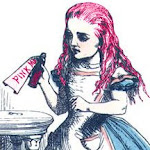
Listen, I am not against world-building. I have drawn my share of maps, believe me. But there comes a point, if you are writing a book, that the narrative has to take precedence.

Comparison has been made to Tolkein, and I can see why. The world of the Half-Continent is the most completely-imagined fantasy world since Middle Earth, in terms of material culture - maybe even more so. Cornish does all of Tolkein's descriptive work, and adds in much of the incidental detail Peter Jackson had to design when he made the movies - the weapons! the uniforms! the stylistic elements! And, like Tolkein, he has illustrated his world himself - and he is a very talented illustrator.

But the pace and tone of Monster Blood Tattoo has very few ups and downs. What Cornish does not do as well as Tolkein - and I make the comparison only as a shortcut, I don't mean to imply intent - is this: when Frodo, in his wanderings, encounters new subcultures and meets new people, Tolkein manages to bring most of these people alive in a few strokes. Rossamund moves about quite a bit as well, but most of his transient comrades seem all but interchangeable. Young guy, old guy. Mean guy, nice guy. Plus, there is not one smile to be had in either of the books so far. The bleak tone never lets up. It's like the trip to Mount Doom all the way, with no Sam Gamgee to occasionally crack us up, or at least cook us breakfast.

I will recommend these books to ravenous fantasy readers, but as spectacular examples of obsessive vision, not as adventure literature per se.